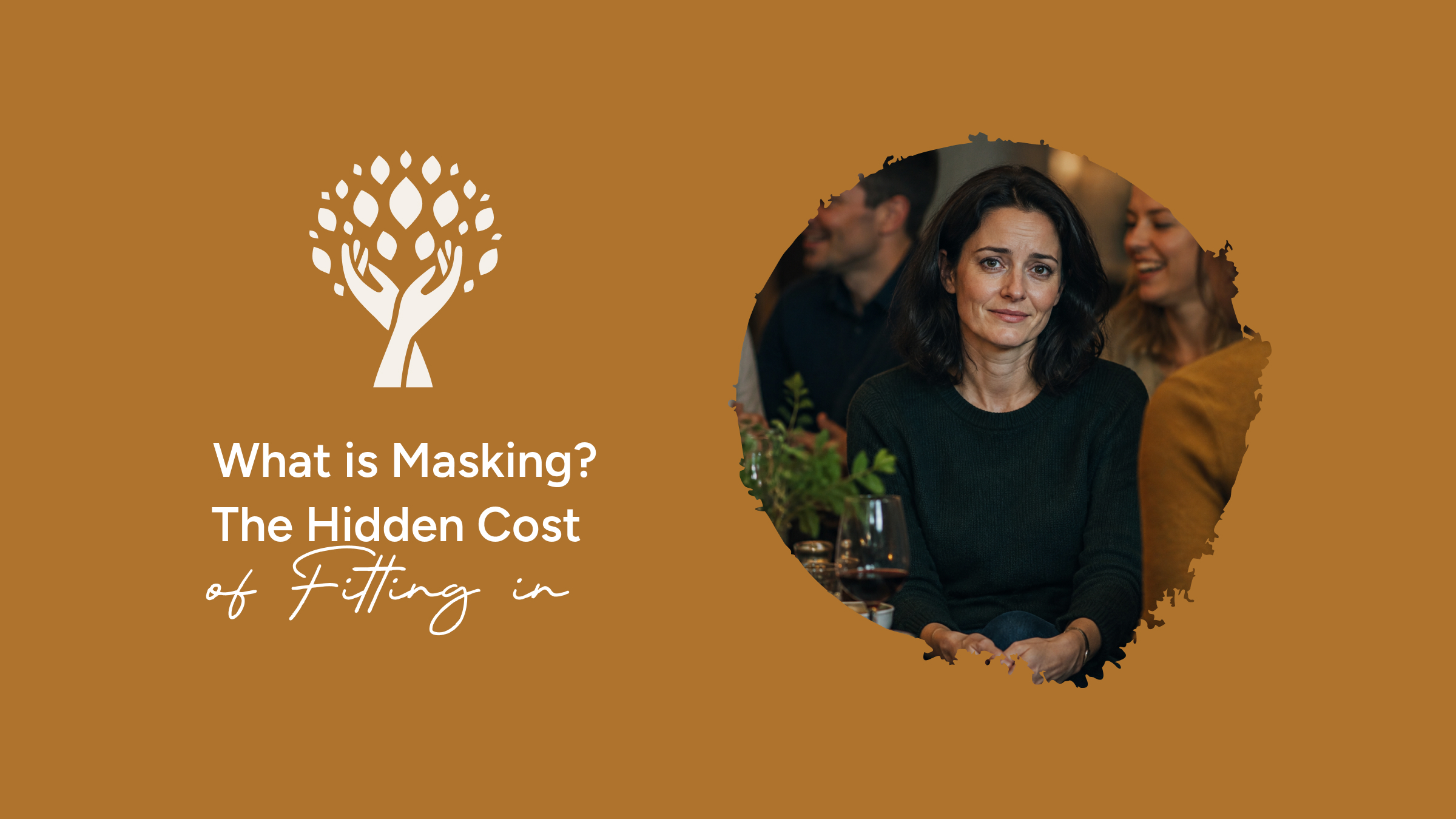
Masking is a word that is getting increasingly used, but what is masking exactly? Masking is when a person hides and suppresses their natural traits, emotions, or behaviours in order to appear more acceptable in a social setting.
What looks like confidence from the outside, often involves a huge amount of effort.
Masking is rarely a conscious decision. For most neurodivergent people, it begins in childhood as a response to repeated messages from the world around them. Being told to make more eye contact. Being encouraged to stop talking about a special interest. Learning that certain movements draw stares or comments. Being praised for sitting still and being quiet.
Over time, these experiences teach a person that their authentic self is somehow too much, too different, or simply not welcome. Masking becomes a way of protecting themselves from rejection, confusion, or misunderstanding. For many people, it becomes so automatic that they are not even aware they are doing it anymore.
This is something that comes up regularly in psychology sessions. Many people arrive not knowing they have been masking at all-only knowing that they are exhausted, and that they cannot explain why. Therapy can be a powerful first step in understanding where that exhaustion is actually coming from.
The signs of masking can vary widely from person to person. Some common examples include:
Forcing eye contact even when it feels physically uncomfortable or overwhelming, because you have learnt it is expected.
Suppressing stimming behaviours such as rocking, hand flapping, or fidgeting in public, even when these help you regulate your nervous system.
Mirroring others socially, copying the tone, language, or body language of people around you to navigate interactions because the unwritten rules do not come naturally.
Performing calm while feeling completely overwhelmed on the inside, because showing distress feels unsafe or inconvenient to others.
Rehearsing and replaying conversations, checking whether you said the right thing or said too much.
Hiding sensory sensitivities, pretending that noise, bright light, or certain textures are not bothering you when they very much are.
Masking can make a person appear incredibly capable, agreeable, and easy to be around. Which is exactly why it so often goes unnoticed, even by the person doing it. A psychologist who works within a neuroaffirming framework is often one of the first people to help someone identify these patterns and understand what they mean.
The hidden cost of masking is real and cumulative. Sustained masking is one of the most significant contributors to autistic burnout, a state of deep physical, emotional, and cognitive exhaustion that does not resolve with ordinary rest. It is also closely linked to anxiety, depression, a diminished sense of identity, and genuine difficulty knowing what you actually feel, need, or want.
When you spend years performing a version of yourself for the world, it can become hard to access who you are underneath. Many people describe feeling like they do not know themselves, or a persistent loneliness even in rooms full of people who seem to like them. That is not a personality problem. That is what long term masking costs a person.
Psychological support at this point is not about fixing something that is broken. It is about having a genuinely safe space to begin to understand your own experience, and slowly build a different way of relating to the world around you.
Camouflaging, as it is sometimes called clinically, is also one of the main reasons autism and ADHD are underdiagnosed in women and girls, who are often socialised to mask more thoroughly and from a younger age. Many people do not receive a diagnosis until adulthood, if at all, precisely because their masking has been so effective. If this resonates, a psychological assessment can offer real clarity and open doors that may have been closed for a long time.
Yes. Social adaptation is something most people engage in to some degree. We adjust our language at work, we hold back certain opinions in certain company, and we compose ourselves in moments where we actually feel overwhelmed.
The difference for many neurodivergent people is that masking is not an occasional adjustment,It is a constant replacement. It is not tweaking around the edges of who they are. It is substituting who they are with a performance shaped almost entirely by other people’s expectations. That level of sustained effort, over years and decades, takes a significant toll on mental health.
What Can You Do if You Recognise Masking in Yourself?
The first step is simply to notice it without judgement. Masking developed for good reasons. It kept you safe. Approaching that with compassion rather than criticism is where meaningful change begins.
From there, finding spaces where you do not have to mask is one of the most restorative things a person can do. This might be time alone, relationships where you feel genuinely safe, or environments where your natural way of engaging is not just tolerated but welcomed.
For many people, therapy becomes the first place they experience what it feels like to unmask. Working with a neuroaffirming psychologist who understands masking deeply, can offer something that is genuinely rare: a space where your natural communication style is accepted, where you are not performing, and where you can begin to reconnect with who you actually are.
Unmasking is not about abandoning every adaptive strategy you have built. It is about reclaiming choice. Choosing when and where you adjust, rather than doing it automatically out of fear.
If this has felt familiar, you are not alone. Many people come to understand their own masking later in life, often alongside a late autism or ADHD diagnosis, or through therapy and deeper self reflection.
At Vibe Well Psychology, we provide neuro-affirming psychological support for children, adolescents, and adults. Our team understands masking both clinically and personally, and we offer a space where showing up as yourself is not just allowed. That is the whole point.
If you are ready to book or just want to learn more about how we can help, we can’t wait to connect with you.