
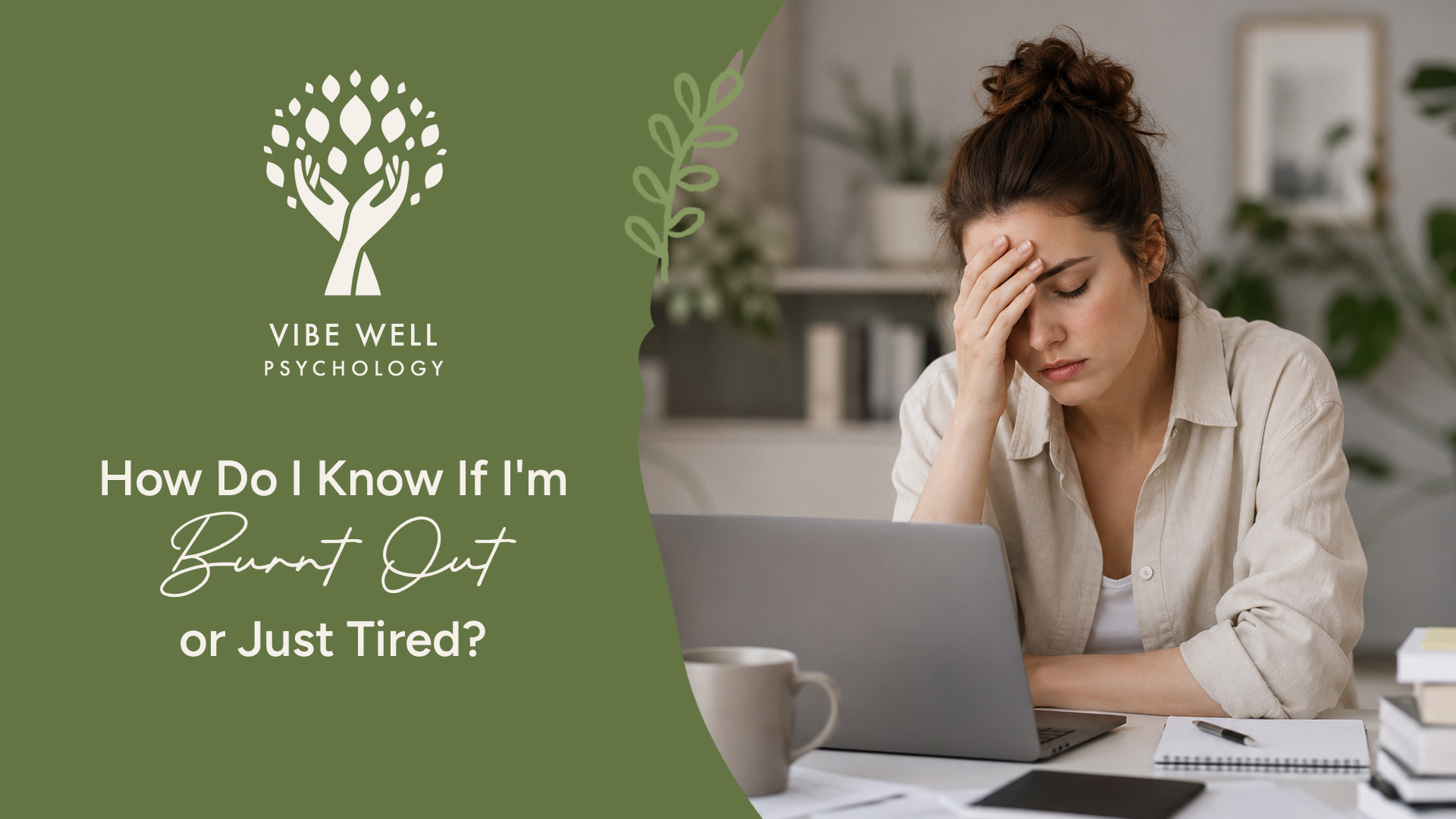
You’ve just had a ten hour sleep but you still feel tired and drained, you might be asking if you’re burnt out or just tired. The answer? If you have had a full night’s sleep, a chilled weekend or even extended time off and return still feeling flat, depleted and disconnected, that is a strong sign that you are experiencing something bigger than just ordinary fatigue.
Tiredness is largely physical. It is the heaviness in your limbs after a long week, the afternoon fog that follows a disrupted night, or the flatness that comes from simply doing too much. Normal fatigue has a clear cause and it responds to rest. You sleep, and you feel better. Your motivation returns. You can enjoy things again.
The defining feature of ordinary tiredness is that recovery feels complete. It goes away.
Burnout symptoms tend to build slowly, often in people who care deeply and push themselves well past the point where their body and mind need a break. Unlike tiredness, burnout does not lift after sleep. Evidence-based therapy can help in support you during this difficult time.
The signs of burnout commonly include:
Exhaustion that rest does not touch. You wake up tired. You go to bed tired. Time off barely makes a dent.
Emotional exhaustion and growing detachment. Things that used to matter start feeling meaningless or too hard. You may feel numb, irritable, or like you are simply going through the motions.
Difficulty concentrating and reduced performance. Tasks that were once straightforward feel overwhelming. Your memory feels foggy and your motivation has quietly disappeared.
Physical symptoms without a clear cause, such as recurring headaches, gut problems, or getting sick more often than usual.
A cynical or negative outlook that feels out of character, particularly towards work, relationships, or the week ahead.
If several of these are familiar, you may already be experiencing burnout rather than everyday tiredness.
The simplest test is to rest, and notice what happens. If a good sleep or a few days off restores you genuinely, tiredness was likely the cause. If you feel the same or worse, burnout is far more likely.
Another useful check is whether the exhaustion is physical or emotional. Mental fatigue and emotional exhaustion are hallmarks of burnout that regular tiredness rarely produces. If you find yourself struggling to care about things you normally would, or feeling a low level dread about the week ahead even after resting, that is worth paying attention to.
Burnout also tends to arrive with a loss of meaning, not just a loss of energy. Ordinary tiredness does not make you question your values or feel disconnected from the people you love. Burnout often does.
Burnout rarely comes from one hard week. It builds over time through chronic stress, prolonged overwork, emotional labour, and an ongoing lack of recovery. Common contributors include:
High pressure work or study environments with little sense of control or recognition.
Being a primary carer for children, a parent, or someone living with disability, often without enough support of your own.
Feeling consistently unseen or undervalued despite your efforts.
Unaddressed anxiety, trauma, or neurodivergent needs that have required significant energy to manage day to day, often invisibly.
For many people, burnout is the result of years of putting everyone else’s needs before their own. It is not a character flaw. It is what happens when a person gives more than they are resourced to give, for too long.
Burnout recovery takes more than a holiday. While rest is necessary, genuine recovery usually involves addressing the conditions that led to burnout in the first place, rebuilding boundaries, and getting proper support.
Some helpful starting points include reducing demands where possible, even temporarily. Prioritising sleep, gentle movement, and nourishing food. Reconnecting with things that bring you genuine pleasure rather than productivity. Talking honestly with someone you trust.
For many people, working with a psychologist is where real change happens. Burnout frequently sits alongside anxiety, depression, or longer standing patterns like perfectionism or difficulty asking for help. A psychologist can help you understand what has been driving it and build a sustainable way forward, tailored to you and your life.
If you have been asking yourself whether you’re burnt out or just tired for longer than feels okay, that question itself is worth listening to. You do not need to have it all figured out before you reach out.
At Vibe Well Psychology, our team provides compassionate, evidence based psychological support for people navigating burnout, exhaustion, anxiety, and the many things life can throw at us. We offer in clinic and Telehealth appointments across Queensland, with options for NDIS participants, DVA clients, and those seeking general psychological care.
You deserve to feel well, not just functional. If you are ready to take the next step, we would love to hear from you.